
CFF is offering a Boot Camp for the lower face and jowls. While many of us have lifted the jowl area of the lower face, it may have left some wrinkles and crinkles and this area may not only need more lifting, but smoothing out as well. This workout will help you to achieve this goal. Lifting and smoothing the skin!
You will execute this workout twice a day, five days a week for one month. You can also execute this workout for another month, making the total Boot Camp two months long. You should not perform any exercises on the weekend or for two days in a row, per week. Depending upon your results, you can then go to once a day for another month, five days a week.
The workout targets specifically the jowls, the lower cheeks, the double chin area and the neck. The neck is the foundation for the face and needs to be addressed at this time, as well.
The Workshop was a great success! So much fun. Here are some of the things people are saying:
- Web21: You’re the real deal. I love learning from someone who actually lives the work—especially as opposed to learning facial exercises from people in their 20s and 30s. Seeing someone nearly 80 who looks terrific, with deep experience and embodied wisdom, makes all the difference. I’m looking forward to more. Peace hugs, :)
- DW77: I loved this Workshop! I love the idea I can lift up the bottom of my face, especially my jowls so quickly. Thank you for making this fun, too.
- CS92: I can't believe you're almost 80 years old. Facial exercises really work. I'm thirty years younger than you and I look older!!! I hope you give more workshops!
- PD73: LOVE! LOVE! Your workshops. This one did not disappoint! The moves are so easy and I can see a lift just after this workshop!
- DG11: Thank you so much for such an informative and useful workshop yesterday. You and your students’ faces are living proof that consistent facial exercises do indeed work-and beautifully so. You look fantastic!
- CB83: I really enjoyed the workshop, it made me feel much more optimistic about the possibility of reversing the signs for ageing that I now see staring back at me from the mirror. .. What I took away from the workshop was that although the exercises are not difficult, I certainly wouldn’t have thought of any of those moves. It must have taken a lot of work and trial and error, to create this set of movements that safely stress the muscles to react in a positive way. But one of the keys I think, is commitment. …I just wanted to say thank you…
The videos -
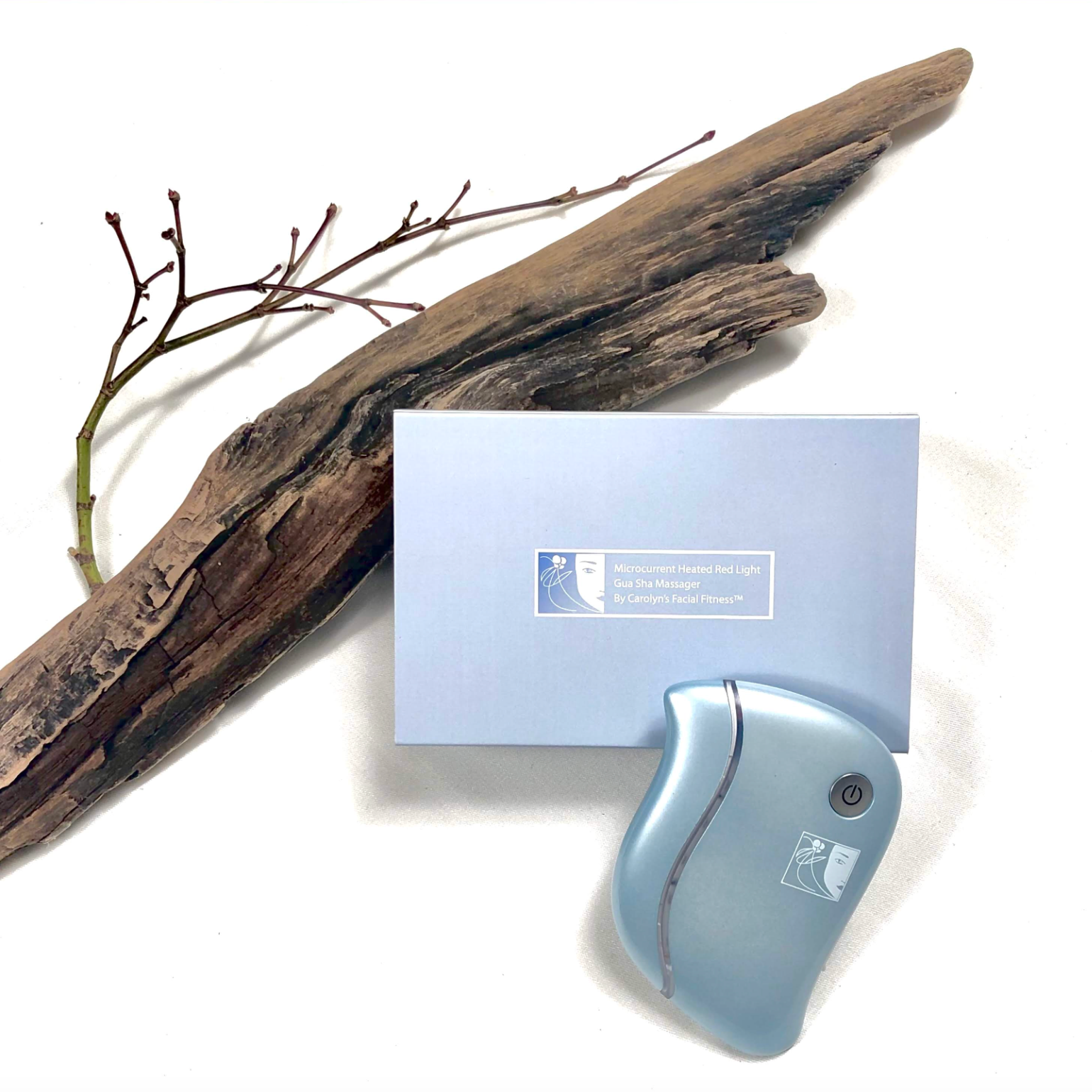
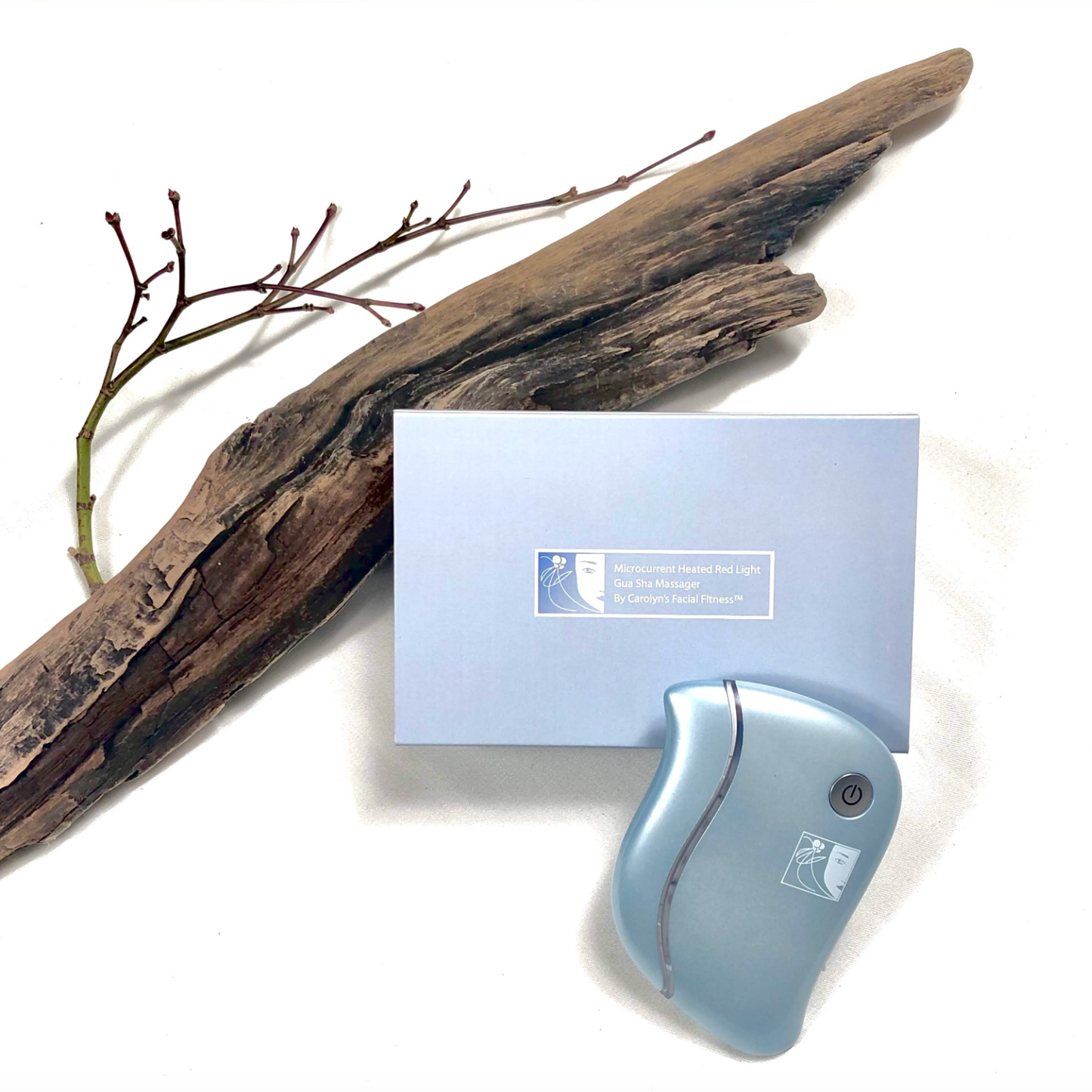
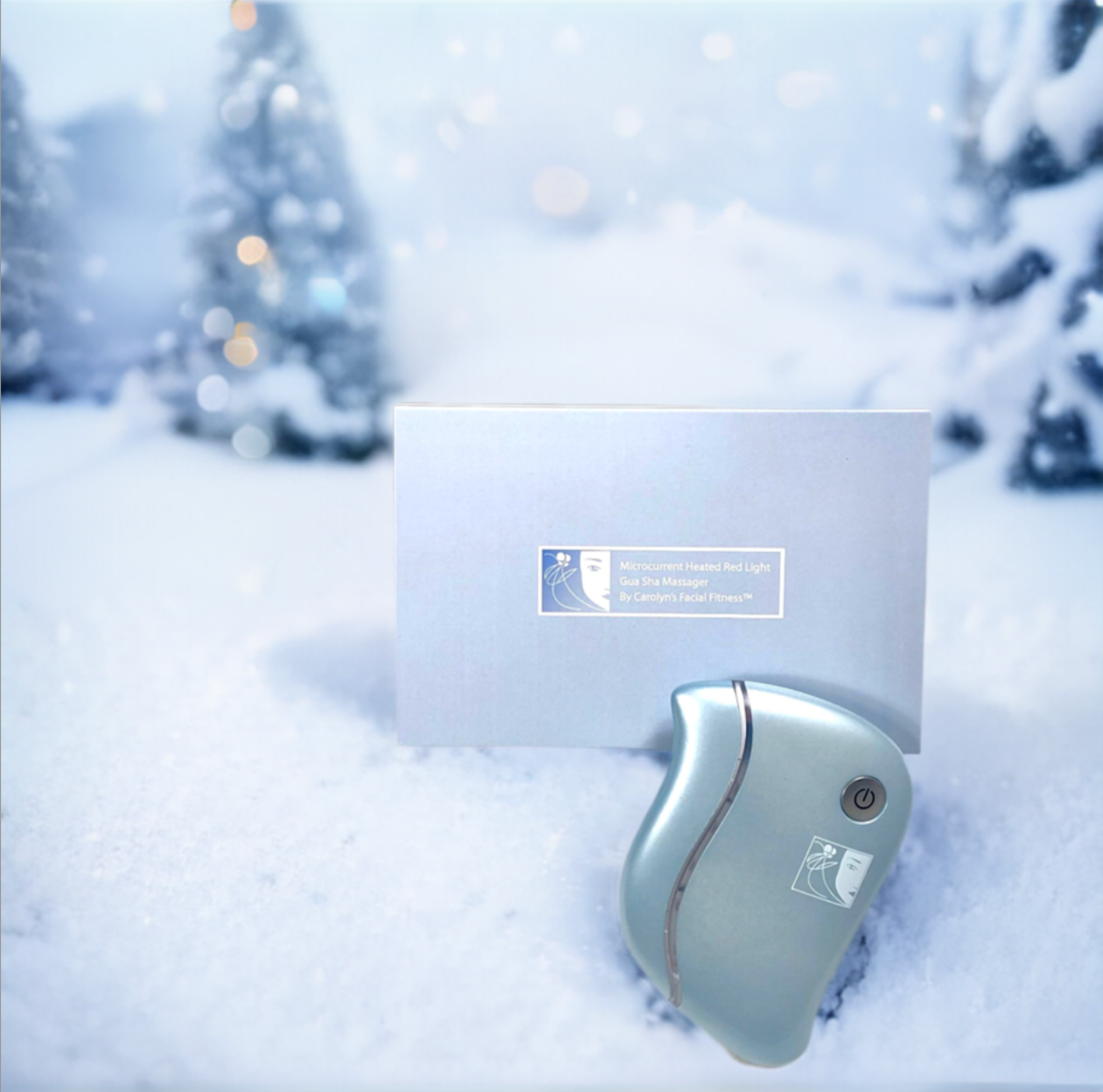
The first one is instruction and the second one is the follow-along-with-Carolyn for the full workout. The third video demonstrates using facial exercises with the CFF Gua Sha as the final step in smoothing, lifting and shaping the lower part of the face
There will be a 15 minute Question and Answer session at the end of the workshop when you can ask Carolyn anything.
You'll also receive a 20% off coupon for anything in the shop!
Fascia
Fascia is a vital, body-wide network of connective tissue, similar to a silky spiderweb. It wraps and supports muscles, organs, bones and nerves. It allows smoother movement and provides structural integrity to the foundation of the body and in the face. It can become tight and painful if dehydrated, stressed or injured, leading to restricted motion. It's composed of collagen and elastin fibers within a gel-like fluid which allows ti to be pliable and firm. This is crucial for sensations, lubrication and maintaining the body's integrated structure.
Facial Fascia
Only in 2026, facial fascia is finally recognized as the essential structural "scaffold" of the face. It's a connective tissue network that influences aging, circulation, and muscle movement. Understanding its layers and maintaining its health is critical for both medical procedures and aesthetic rejuvenation.
Facial adhesions are composed of fibrous fascia collagen fibers. These collagen fibers are the same substance that makes up tendons, ligaments, and other fibrous fascial tissues. Nerve and vascular structures that come through the SMAS layer can become entrapped through fascial adhesions.
Facial adhesions can occur from trauma, surgical procedures, repetitive facial movements, inflammation, facial fillers, injections, scars, other facial procedures.
Facial fascia is the connective tissue network beneath the skin. It provides support, structure and helps with circulation. Basically there are two layers of facial fascia
Anatomy of Facial Fascia -

The face is structured in concentric layers, with fascia existing in two primary forms:
- Superficial Fascia (Layer 3): Known as the SMAS -Superficial Musculoaponeurotic System. This thin layer connects your facial muscles to the skin. It moves with your expressions and is the layer typically manipulated during surgical facelifts. With CFF, we also manipulate this fascia to smooth and lift the facial structure for a youthful look. CFF offers many techniques for releasing this stuck down fascia that causes crinkles in the face!
- Deep Fascia (Layer 5): Is tougher, consisting of many layers that wrap around deep muscles, nerves, and blood vessels.
NOTE: Deep Fat Interconnectivity: Recent 2026 research clarifies that the "deep fat" of the face is not a separate layer but is actually embedded within the deep fascia. See the workout for the Fat Pads in the Face.
When fascia is healthy, it is fluid and mobile, allowing skin to glide smoothly. Over time, however, it can deteriorate due to stress, dehydration, and age.
What this Means for Facial Exercisers -
Sagging & Folds: If fascia becomes weak or stretches, it can no longer support fat pads, leading to drooping cheeks, jowls, and marionette lines.
Adhesions & Wrinkles: "Stuck" or stiff fascia (adhesions) can hold deeper wrinkles "in place" and restrict blood and lymph circulation, resulting in puffiness and a dull complexion. This is the crinkling we see after we lift the jowl area and we see on the sides of the face as we age. This workshop will not only lift and smooth the bottom of the face, it will release these stuck down adhesions and smooth the area out. We also employ the Wrinkle Release Technique in CFF to address these issues!
This workout will help to release these adhesions and restore a youthful lift and smooth skin. This method is considered the "fascia care and release technique".
Gua Sha: There is also a video demonstrating using the CFF Gua Sha to further release the stuck down tissue adhesions. It is the third video in the series.
Healthy fascia allows the skin to glide smoothly, supporting tone and fluid drainage. Tightness from stress, dehydration or age can lead to sagging, puffiness, crinkling and dullness of the skin affecting how wrinkles are formed.
Conclusion -
You will be shown the best techniques for releasing stuck down fascia, lifting and shaping the face for a more youthful look and smoothing the skin while tightening the neck for a smooth, youthful glow!